

Quick Answer
Many buyers think the best strategy is simply choosing between a freehold or a new launch. In reality, the better question is whether your purchase matches your holding period, financing ability, and long-term family plans.
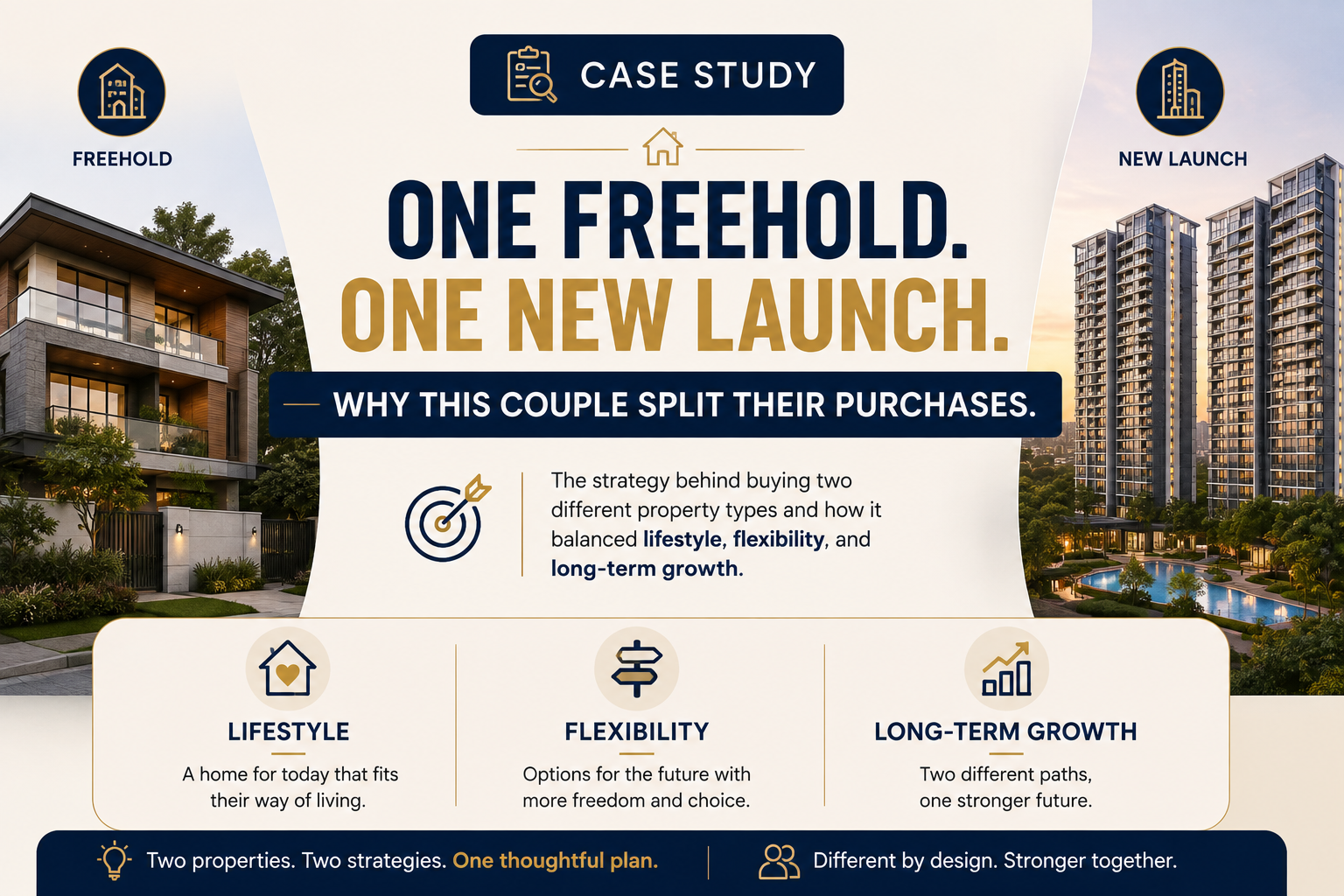
In this case, the couple purchased:
A freehold property for long-term family living.
A new launch condo for future capital growth.
Each property was structured under different ownership arrangements to maximize borrowing power while remaining within legal guidelines.
The strategy wasn't about avoiding taxes, it was about matching the right property to the right objective.
Introduction
When most HDB owners upgrade, their biggest question is usually, "How much can we afford?"
This couple asked something different.
Instead of focusing only on budget, they wanted to know how to structure two future property purchases so they could enjoy a stable family home while still building long-term wealth.
Their plan involved:
Selling their HDB.
Buying a freehold property for their family's future.
Purchasing a new launch under a separate ownership structure for investment growth.
Rather than following common property myths, every decision was based on their timeline, financing, and long-term objectives.
Why didn't they buy two freehold properties?
Because different property types perform differently over different holding periods.
Generally:
New launches and 99-year leasehold projects often see stronger appreciation during their first 10 years.
Freehold properties usually show their greatest advantage over much longer holding periods.
Since the couple intended to stay in their own home for more than a decade, a freehold property suited their lifestyle.
The new launch was intended as an investment, making it a better fit for capital growth.
Is a 99-to-1 ownership structure legal?
Yes, provided it is set up correctly from the beginning.
When both buyers own no existing property before purchase, they can legally decide their ownership percentages, whether it's:
99-1
80-20
50-50
This differs completely from transferring 1% ownership after purchasing solely to reduce taxes, which is not the same strategy.
Why split purchases under different names?
The objective wasn't tax savings.
The main benefits were:
Better use of combined income.
Greater financing flexibility.
Preserving borrowing capacity for future purchases.
Allowing each property to serve a different purpose.
One property became the family's long-term residence, while the other remained an investment asset.
Why not simply buy the hottest new launch?
Popular projects often attract attention because of temporary demand drivers.
Instead of chasing headlines, buyers should evaluate:
Holding period.
Future resale demand.
Location fundamentals.
Family lifestyle needs.
A project with steady long-term demand may outperform a project that is simply "hot" today.
How should buyers negotiate?
Never become emotionally attached to a single unit.
Instead:
Shortlist multiple acceptable options.
Understand the seller's motivation.
Adjust negotiation strategy based on market conditions.
Avoid assuming every seller will accept the same discount.
Good negotiation starts long before the first offer.
How HomeUp Approaches This
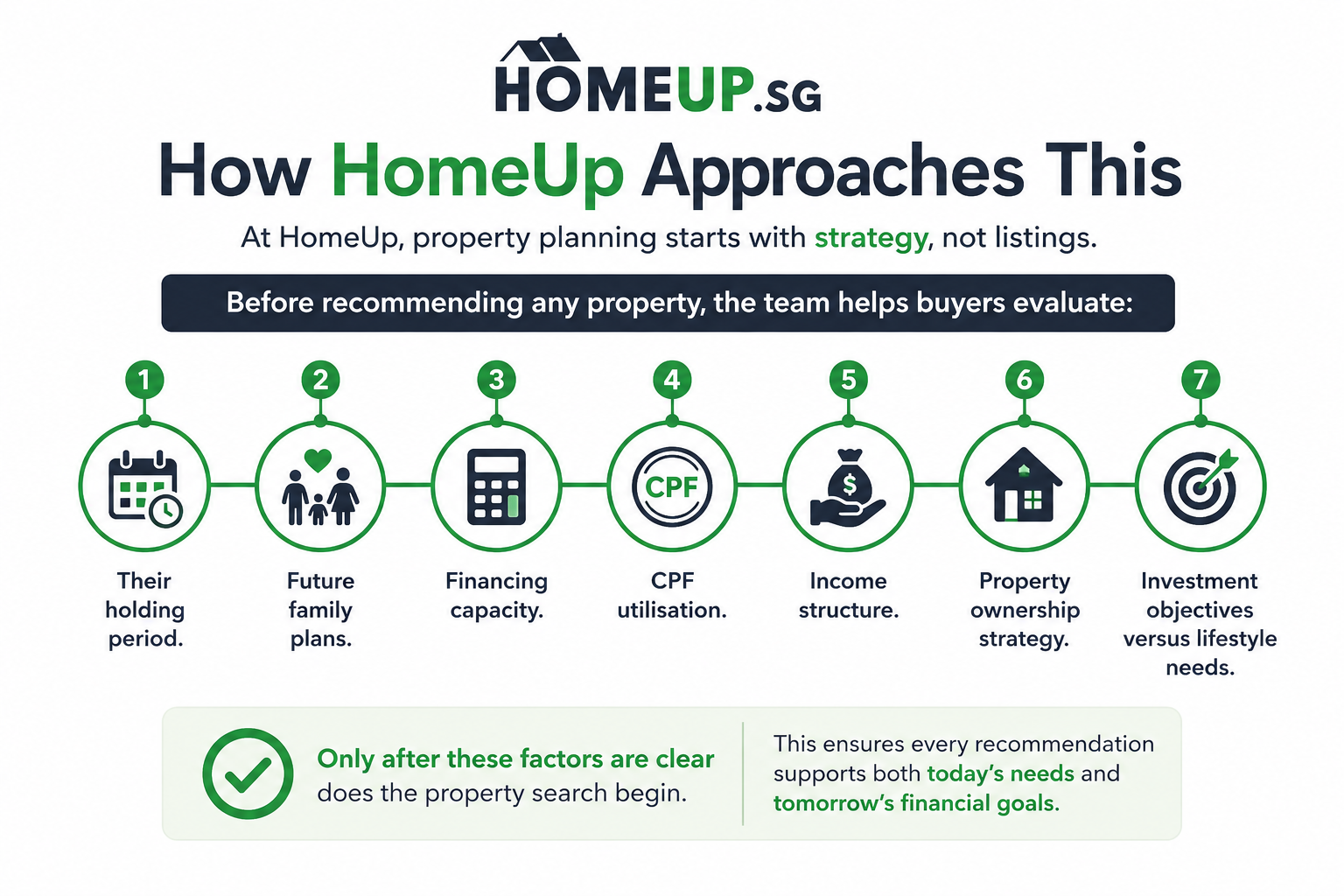
At HomeUp, property planning starts with strategy, not listings.
Before recommending any property, the team helps buyers evaluate:
Their holding period.
Future family plans.
Financing capacity.
CPF utilisation.
Income structure.
Property ownership strategy.
Investment objectives versus lifestyle needs.
Only after these factors are clear does the property search begin.
This ensures every recommendation supports both today's needs and tomorrow's financial goals.
Verified Transaction
This transaction is based on an actual completed purchase by our client.
Below is the official CEA transaction record showing the completed purchase at client's chosen property.
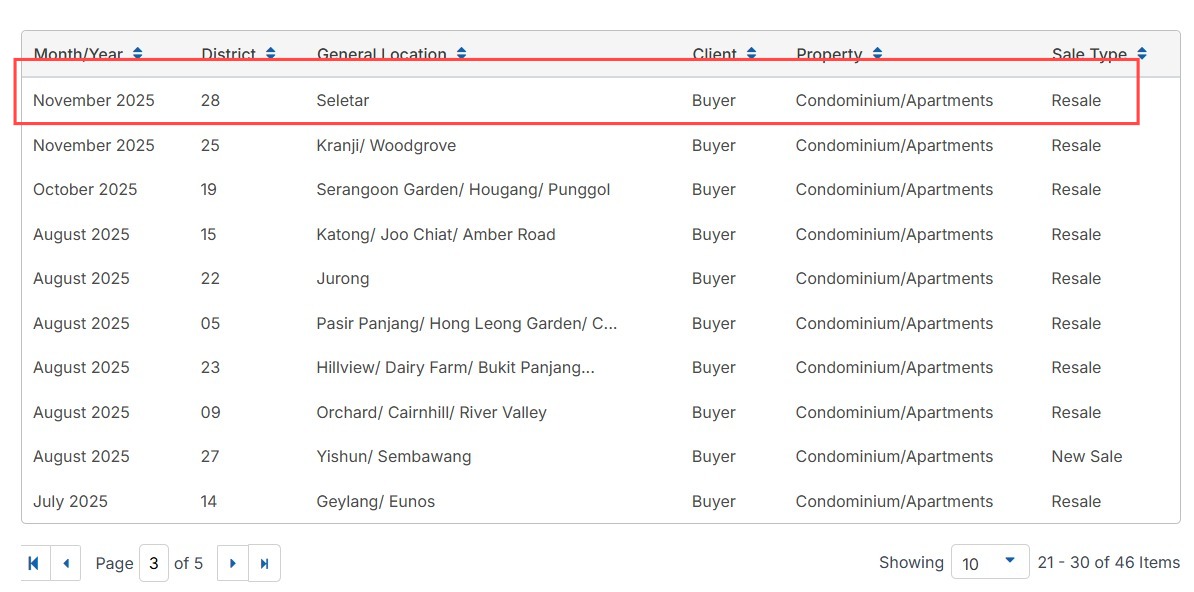
Official CEA transaction record for the Seletar purchase. Client's personal information has been redacted for privacy.
Conclusion
There is no single "best" property strategy.
The right decision depends on:
How long you intend to hold the property.
Whether it's for living or investing.
Your financing options.
Your family's future plans.
For this couple, combining a freehold family home with a separate new launch investment created a balanced strategy that aligned with both stability and long-term growth.
The best property purchase isn't always the most popular one—it's the one that fits your personal goals.
Tong Boon is the Co-Founder of HomeUp, a flat-fee real estate advisory in Singapore. He was featured as an independent property expert on CNA's Open House for his views on the Private Residential Market. He also heads the award-winning Champion Private Buying Division in his Agency.
This article reflects his independent views and is not affiliated with any developer or sales team. Client names have been changed to protect their privacy.